The History of Crumpets: From 17th-Century Griddles to Modern Teatime
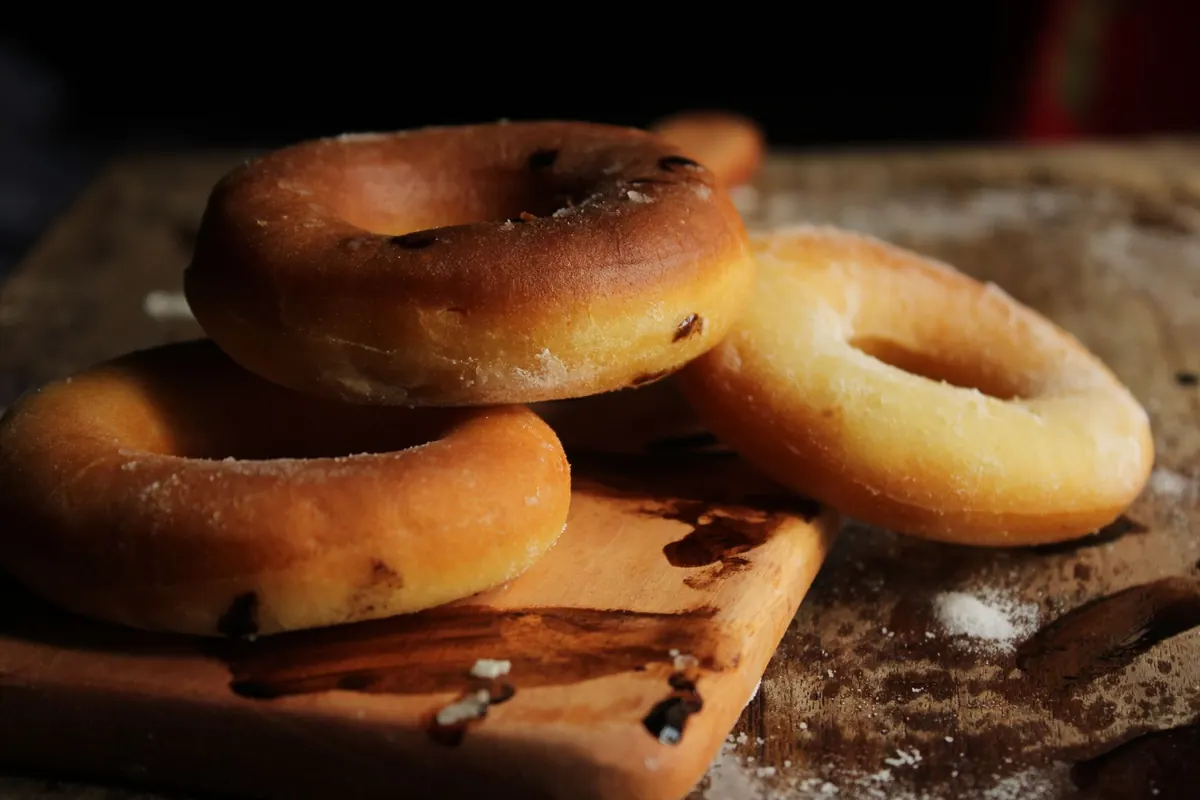
Few things in British baking are as quietly odd as the crumpet. It is a pancake that refuses to lie flat, a bread that never sees an oven, and one of the only baked goods whose entire appeal rests on a network of holes. Warm it under the grill, let the butter pool in those craters, and it earns its place beside the teapot. The route it took to get there is longer and more tangled than the supermarket shelf suggests.
What Makes a Crumpet a Crumpet?
Start with the batter, because that is where everything is decided. A crumpet is made from a yeasted batter — pourable, closer to double cream than to dough — cooked inside a metal ring on a flat griddle. The ring does the shaping; the yeast does the rest. As the batter sets from below, bubbles rise, break on the surface and fix in place, leaving the open craters that give a crumpet its grip on melted butter.
Traditionally only the base is cooked on the griddle. The top stays pale, firm and full of holes, and is finished later under heat. That two-stage habit is why a crumpet is at its best toasted rather than eaten straight from the pan.
It also explains the confusion with its cousins. An English muffin is a soft dough, cooked in rings on both sides and drier in crumb. A pikelet is usually thinner and wider, often cooked without a ring at all. Only the crumpet has that pale, pitted top.
Crompid Cakes on the Hearth
The word shows up in English writing in the 17th century, often spelled crompid cake or crumpet, and it seems to hang around the idea of something curled, wrinkled or crumpled — a fair description of a surface bubbling over hot iron. Welsh crempog is a cousin word, and the family resemblance across Britain and Wales is obvious.
For most households, this was simply how bread happened. Ovens were expensive, communal or non-existent; a bakestone, a flat iron or a heavy pan over embers was not. Oatcakes, bannocks, pikelets and crumpets all belong to that griddle tradition, and early versions were leavened with ale barm or brewer's yeast, whatever the local brew left behind.
Those first crumpets were often thin and soft, more like what we would now call a pikelet. The thick, ring-set, deeply holed crumpet is the result of a long, slow refinement of batter, heat and hoops.
Muffin Men, Copper Rings and Street Trade
By the 18th and 19th centuries, crumpets had left the hearth and joined the street. Sellers carried trays and baskets through towns in the late afternoon and early evening, keeping the goods warm under a cloth and announcing themselves with a bell — the muffin man of nursery fame sold muffins and crumpets alike. For working households they were cheap, filling and quick to revive over a fire, which made them tea rather than a treat.
The rings themselves were a trade. Brass and copper hoops, made by tinsmiths in sets, gave a professional crumpet its straight sides. Home cooks made do with whatever circular tin they had, and many still do.
Pikelets, Bara Pyglyd and the Regional Map
Names shift as you travel, and the arguments are genuine. In some counties the thing you cook in a ring is a crumpet; twenty miles away, the same batter fried without a ring is a pikelet. A rough guide:
- Wales: bara pyglyd and crempog, cooked on a bakestone, often thinner and served buttered and sometimes sweetened.
- The Midlands and the Potteries: pikelets, wide and thin, eaten cold with butter or toasted under the grill.
- Scotland: a softer, flatter crumpet, frequently raised with bicarbonate rather than yeast and cooked on both sides like a thick pancake, served with butter and jam.
- Northern England: oatcakes and pikelets dominate, and "crumpet" is often the local word for what southerners would call a pikelet.
None of these is wrong. They are the same idea — a live batter meeting a hot, dry surface — adapted to local flour, fuel and habit.
From Griddle to the Teatime Table
Crumpets slipped into afternoon and high tea in the 19th century, and their short shelf life helped. A crumpet stales within a day, going leathery and dull; toasting brings it back, crisping the base while softening the crumb. Butter melts into the holes instead of sliding off, which is why the pair became inseparable.
The 20th century industrialised the process. Rings multiplied on conveyor belts, batter was mixed in bulk, and crumpets arrived in plastic packs to be kept in the bread bin and toasted on demand. Convenient, certainly — but a supermarket crumpet is a bouncier, blander thing than one built on a long ferment, and that difference is exactly why home baking has come back around.
Making a Batch at Home
The method is forgiving once you accept two things: the batter must be wet, and the pan must be patient.
- Whisk strong white flour, warm water (or half water, half milk), dried yeast, a little sugar and salt into a smooth batter — roughly 300g flour to 400ml liquid. Cover and leave until foamy and faintly sour, an hour or more.
- Stir in a small pinch of bicarbonate of soda dissolved in water just before cooking. This gives the final lift and the open holes.
- Heat a heavy frying pan or flat griddle over medium-low heat. Oil the rings lightly, then wipe the pan almost dry.
- Fill each ring about two-thirds full. Wait. Bubbles should appear within a minute or two and burst into holes.
- When the surface has set and the base is gold, lift off the ring with a cloth and slide the crumpet onto a rack. Do not flip it.
If the crumpets come out flat and holeless, the pan is too cool or the batter too thin. If they burn before the holes form, the pan is too hot and the batter is too thick. Metal pastry cutters work well as rings; a wide, thin batter cooked without them will give you very good pikelets.
Toasting, Topping and Keeping
Toast the holey side first, under a grill or in a toaster, until the base crisps and the top turns patchily golden. Butter immediately, generously, and let it settle in the craters before you add anything else. Mature cheddar melted under the grill, a poached egg, Marmite, honey, or smoked fish all justify the effort; so does plain salted butter and nothing else.
Crumpets freeze beautifully — stack them with baking paper between, bag them, and toast straight from frozen. Kept at room temperature they are best within a day or two, after which the grill is not optional but essential.
Photo: Standpoint / Pixabay